Historic Preservation · Leesburg, Virginia
Selma Mansion
"Beautiful Castle" — from the Gaelic, 1810
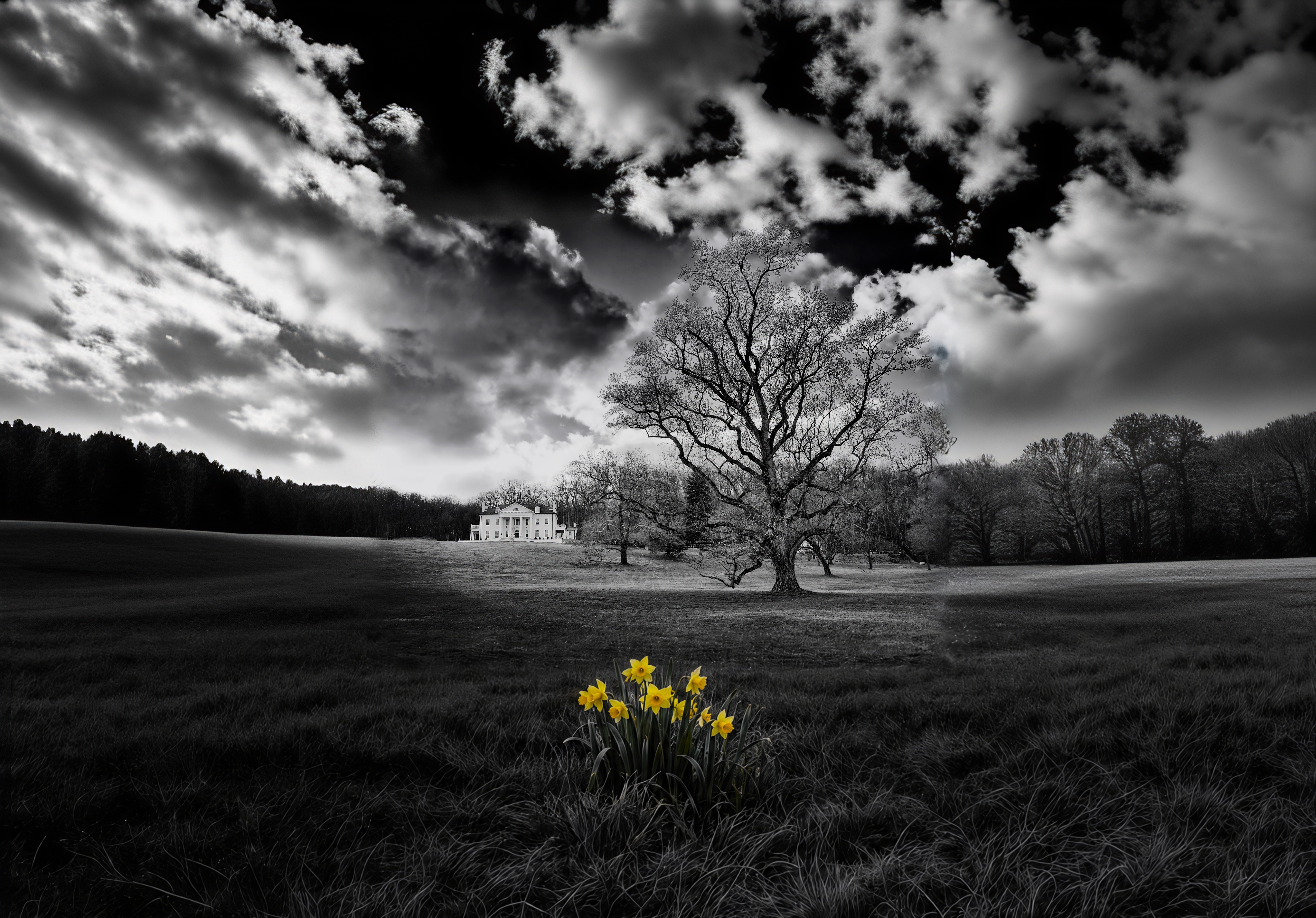
Through the weeds and vines, the daffodils were still pushing through — yellow, hopeful, dancing in the breeze. The house was near death. The garden remembered.
The Selma Daffodil
A Symbol of Rebirth
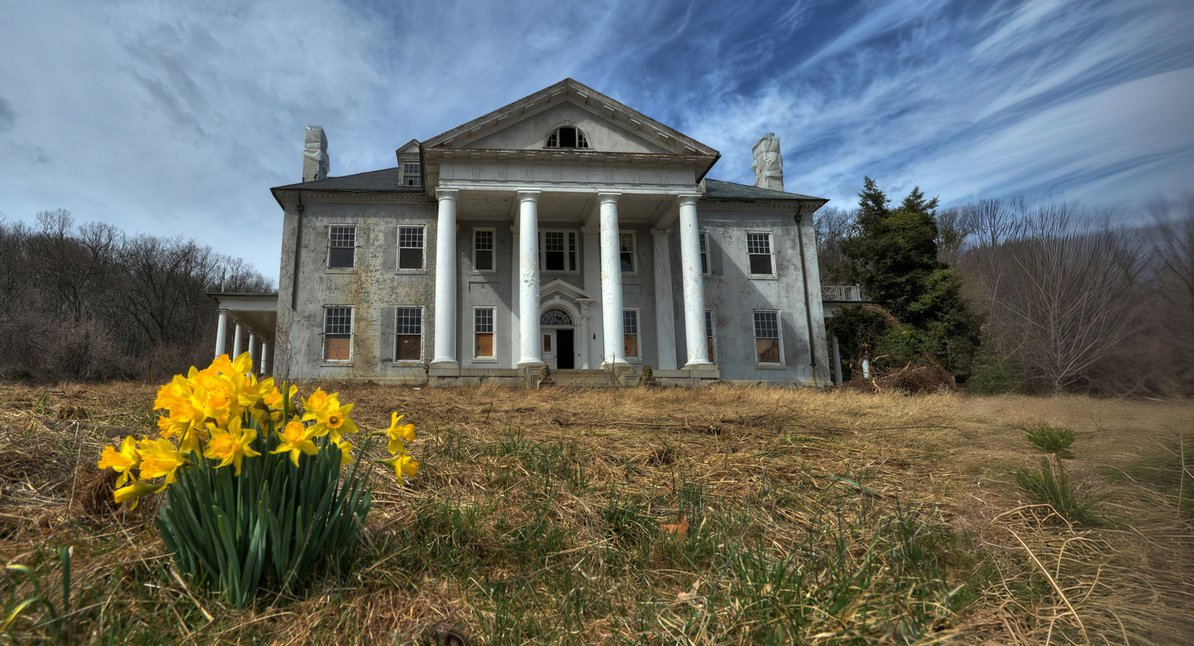
"When we first saw Selma in its abandoned state, it was in the dead of winter. The house itself was cold and near death. On the day we closed on the property, through all the weeds and vines and high grass, Scott and I noticed daffodils poking through the overgrowth. They were all yellow and hopeful as they danced in the breezes in the sunshine. In that moment, I remembered Wordsworth's daffodil poem and that daffodils symbolize rebirth and new beginnings. And that is why, for me and my husband, the daffodil became synonymous with Selma's rebirth."
— Sharon Virts
I Wandered Lonely as a Cloud · William Wordsworth
When all at once I saw a crowd,
A host, of golden daffodils;
Beside the lake, beneath the trees,
Fluttering and dancing in the breeze…
— the poem Sharon recalled the day Selma's future became clear
A History That Dates to America's Founding
Selma Through the Centuries
Originally part of the Raspberry Plain land tract purchased by Ann Mason for her son Thomson in 1741, Selma was built by Armistead Mason — Thomson's grandson — in 1810. The Mason family's southern lands became Gunston Hall, home of George Mason IV, Father of the Bill of Rights.
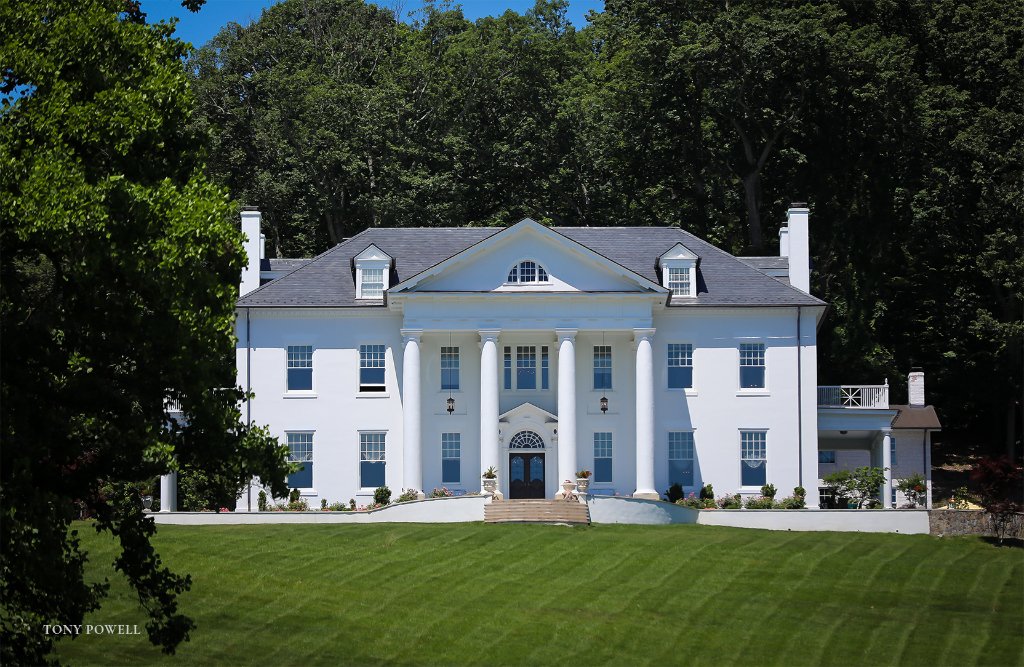
Owned by the Beverley family during the Civil War, the original Mason home burned in the 1890s. The property passed through the hands of Maryland Governor Thomas Swann and then Elijah B. White — who rebuilt the mansion incorporating remnants of the original structure — before Sharon Virts and Scott Miller rescued it from ruin in 2016.
Located in Leesburg, Loudoun County — a district that sheltered President Madison and the U.S. Constitution during the War of 1812, and witnessed one of the Civil War's first battles — Selma sits at the very heart of American history.
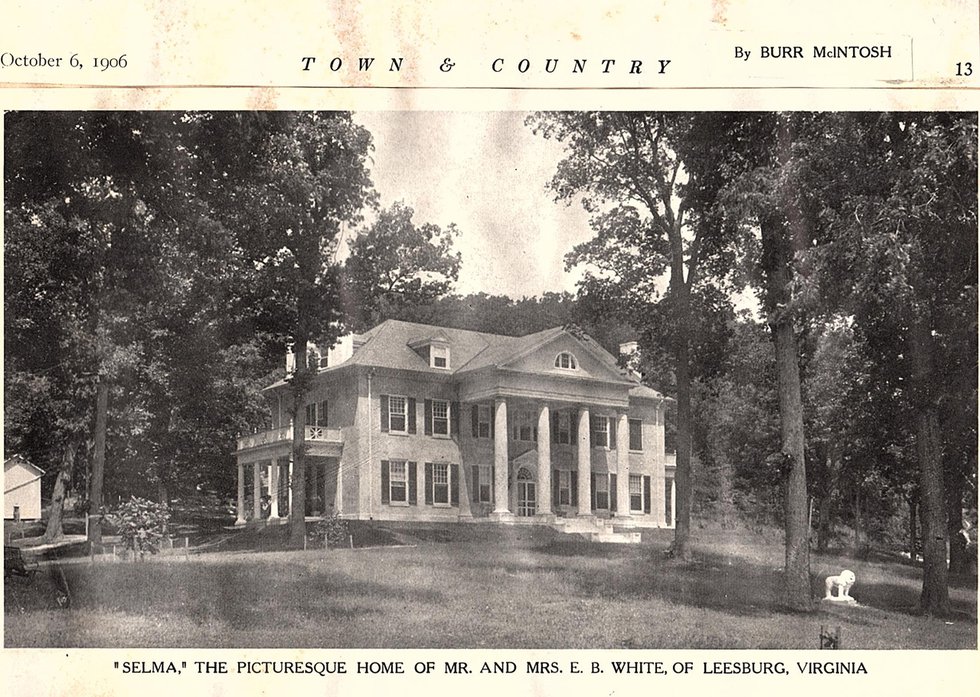
Town & Country · October 6, 1906 — "Selma," the picturesque home of Mr. and Mrs. E. B. White, Leesburg, Virginia.
Selma Through the Centuries
From the founding era to the restoration — a living piece of American history.
1741
Ann Stevens Thomson Mason purchases 10,000 acres of Lord Fairfax's Northern Neck Proprietary for her children, including future father of the Bill of Rights George Mason IV.
1810
Armistead Thomson Mason builds an exquisite mansion at the base of Catoctin Mountain. He names it "Selma" — from the Gaelic for "Beautiful Castle."
1860s
Selma endures a Civil War raid. Owned by the Beverley family during the war, the property later passes to Maryland Governor Thomas Swann, then to Elijah B. White, who builds a new mansion incorporating remnants of the original.
1890s
A destructive fire burns the original Mason home. Elijah B. White rebuilds, incorporating a small portion of the original Mason structure into the new design.
2016
Sharon Virts and Scott Miller acquire Selma and begin a meticulous, top-to-bottom restoration after years of neglect and vandalism.
2019
Restoration complete. Over 109,000 followers watched the story unfold — making it one of the most-watched preservation stories in America.
The House That Remembered
Two centuries of love, loss, ruin and rebirth — held within the walls of one Virginia mansion.
Armistead Mason laid the first stone in 1810. What followed was more than two hundred years of American life — war and fire, families arriving and disappearing, rooms falling silent, and a great house nearly lost to time.
Then, among the weeds, came the daffodils.
When Sharon and Scott found them still rising from the earth, Selma was waiting.
Not simply to be restored, but to be remembered.
Because Selma has never been just a house.
It is a witness.
The House They Found
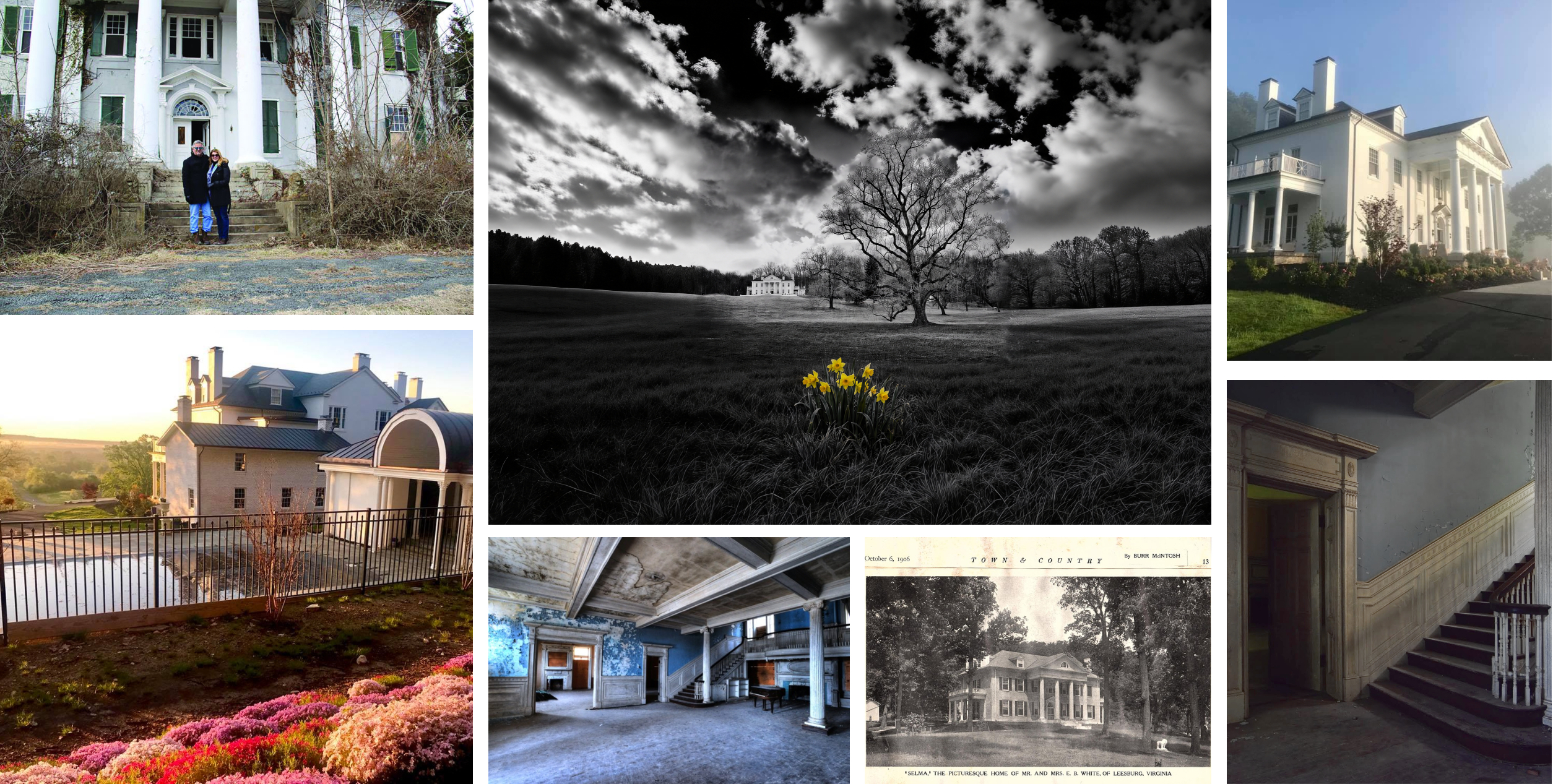
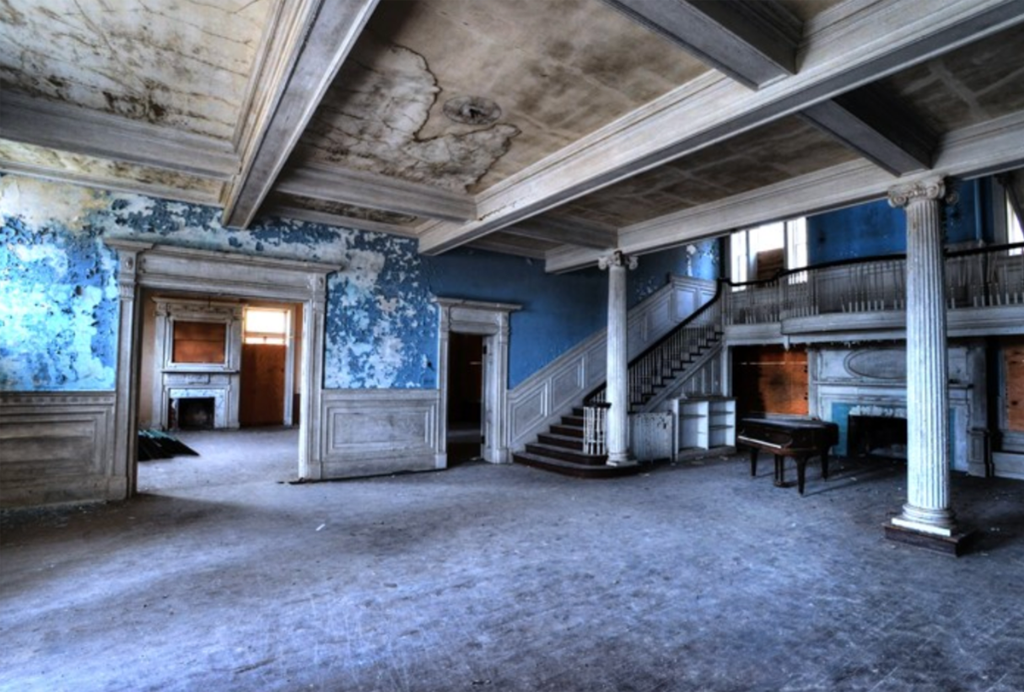
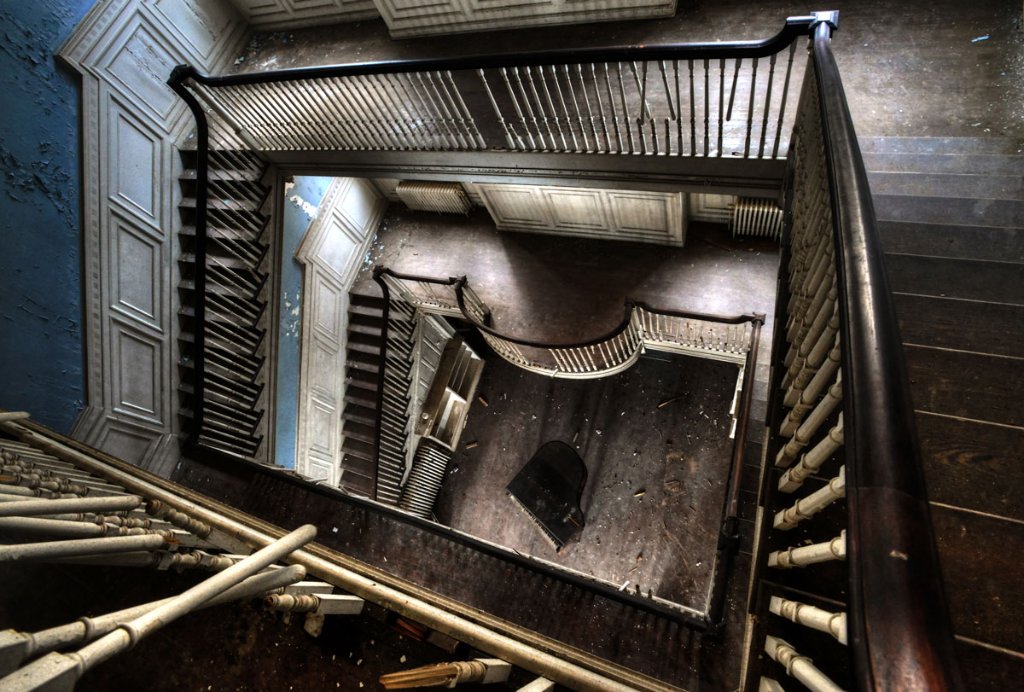
By the time Sharon and Scott first stepped through Selma's doors, time had taken its toll. Decades of abandonment had left the mansion fragile, weathered, and fading. But beneath the damage, the bones of Selma remained. This is the house as they found it.
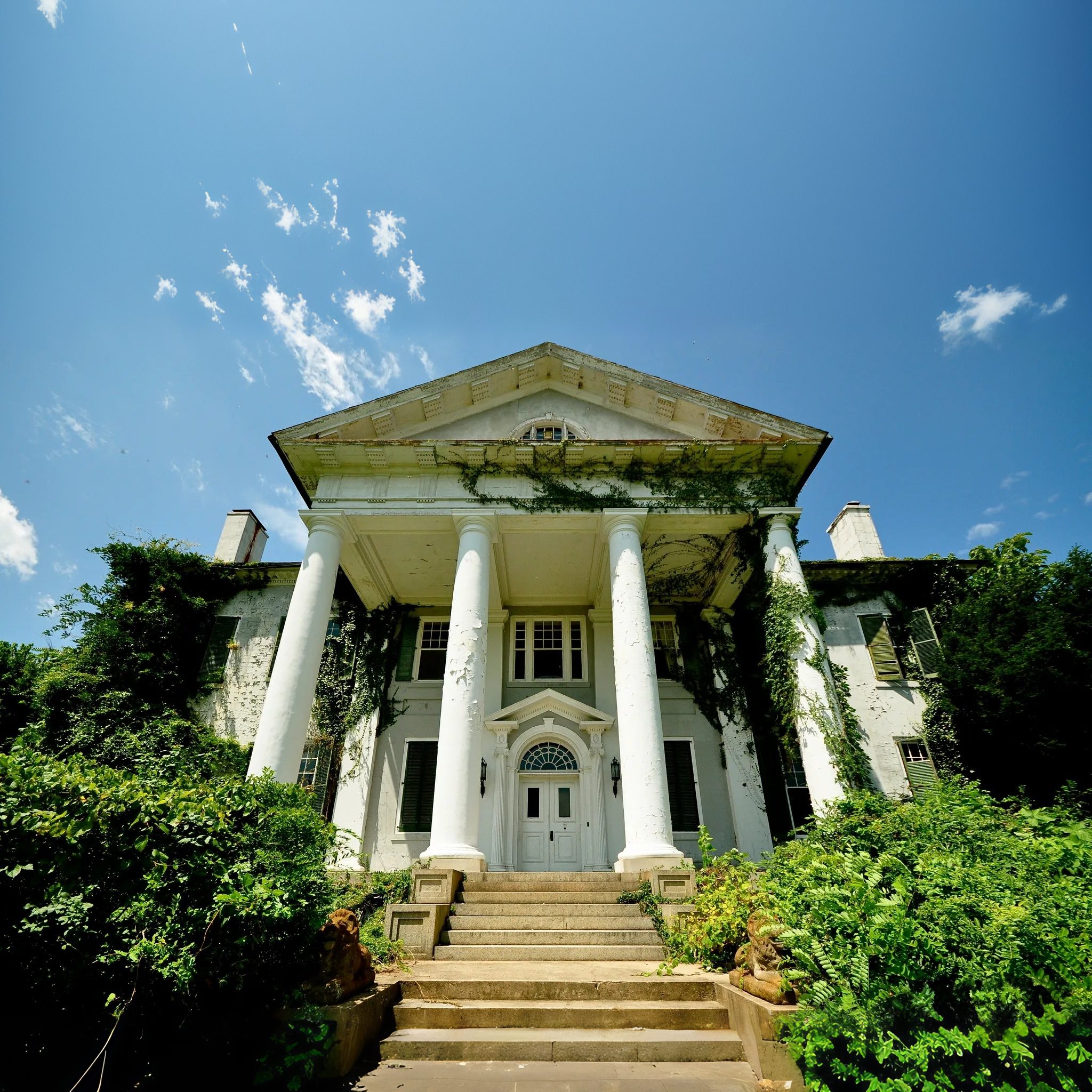
Ivy swallows the portico. The white columns — once the pride of Loudoun County — stand choked and peeling, the stone lions still guarding steps that no one had climbed in years.
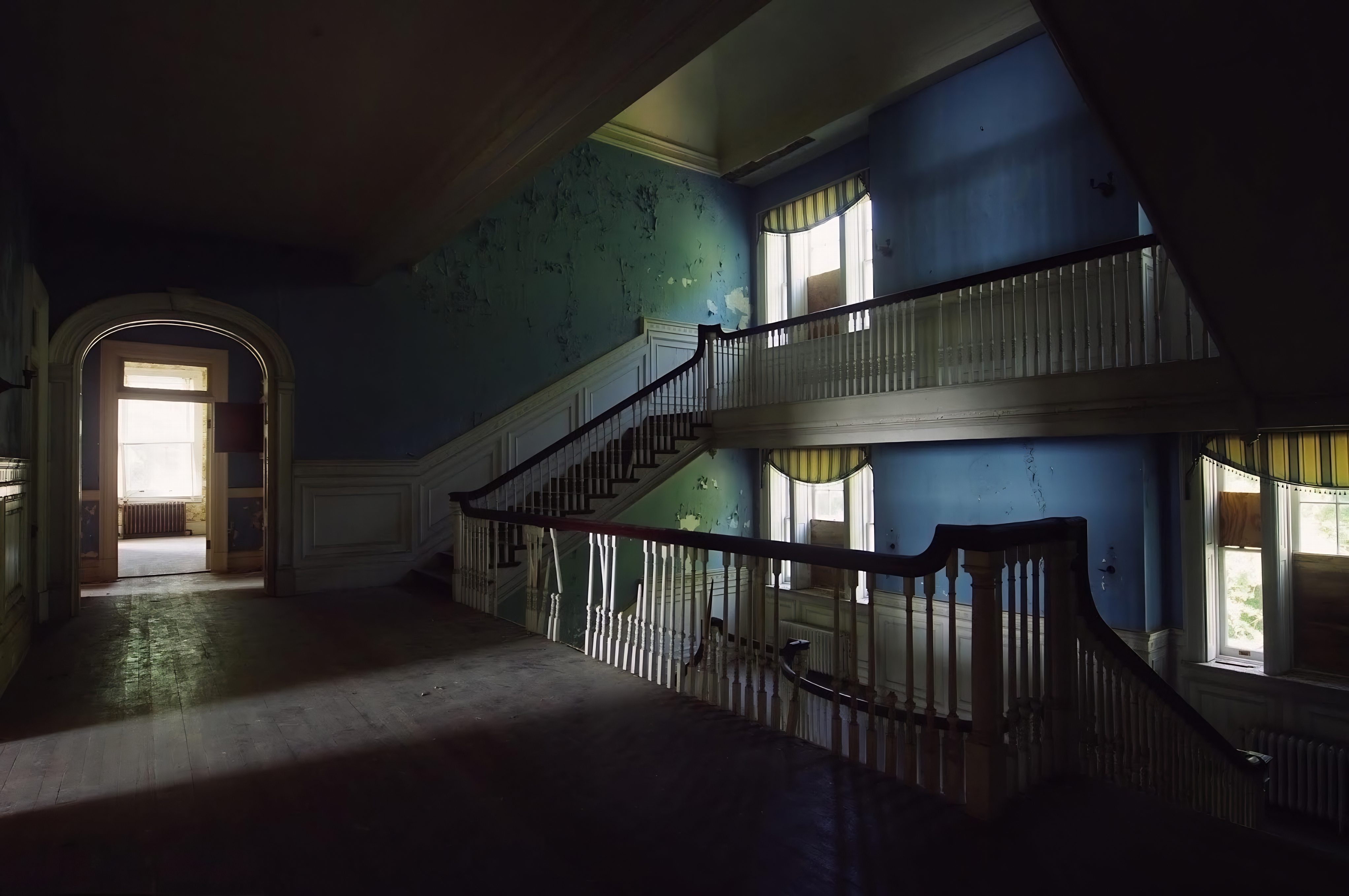
The staircase landing. Light cuts through striped valances across peeling teal walls — the grand bones of the house still standing, still waiting to be heard.
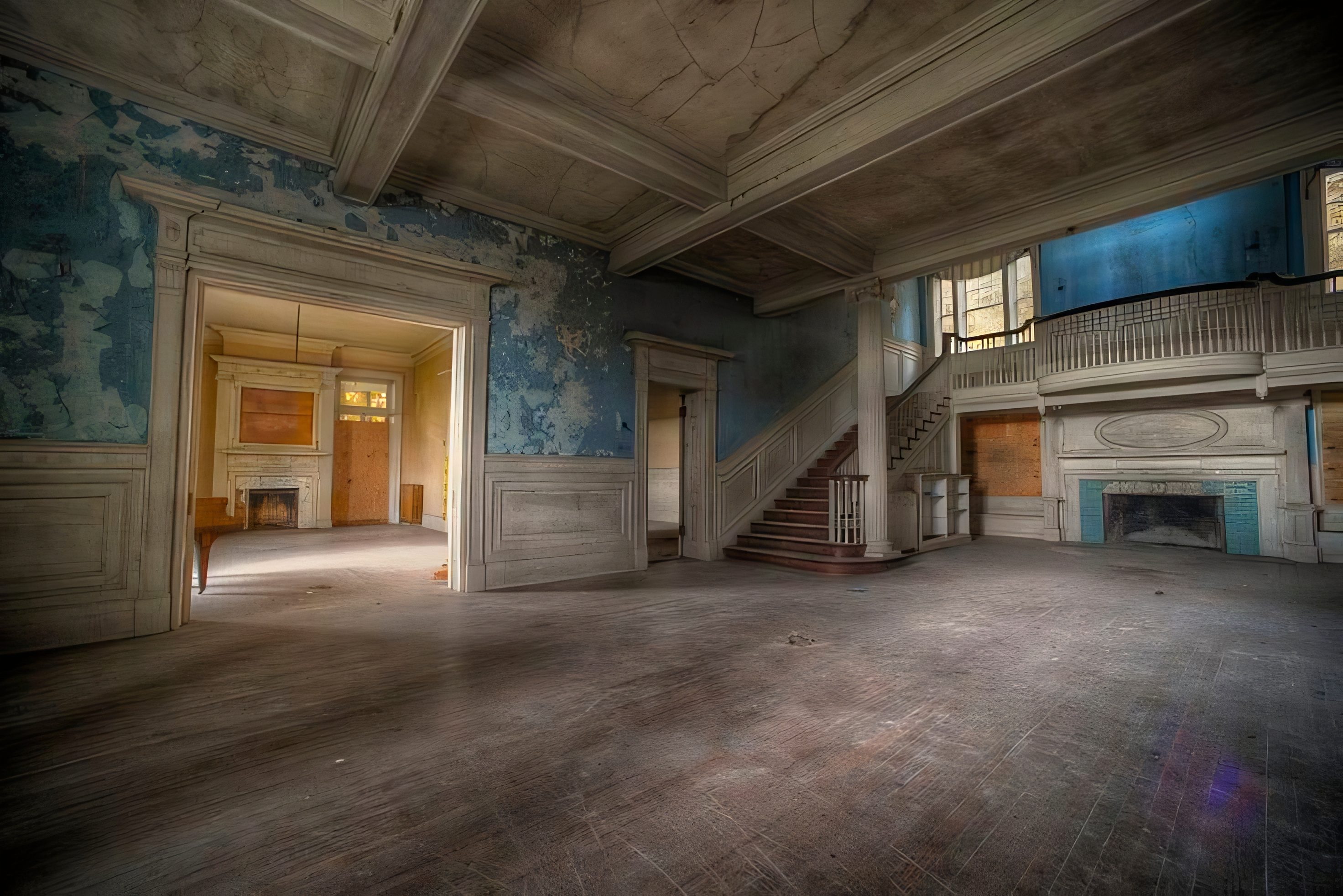
Plaster hangs from the coffered ceiling in great curling sheets. The fireplace hearth still holds its teal paint — a flash of the life that once filled these rooms.
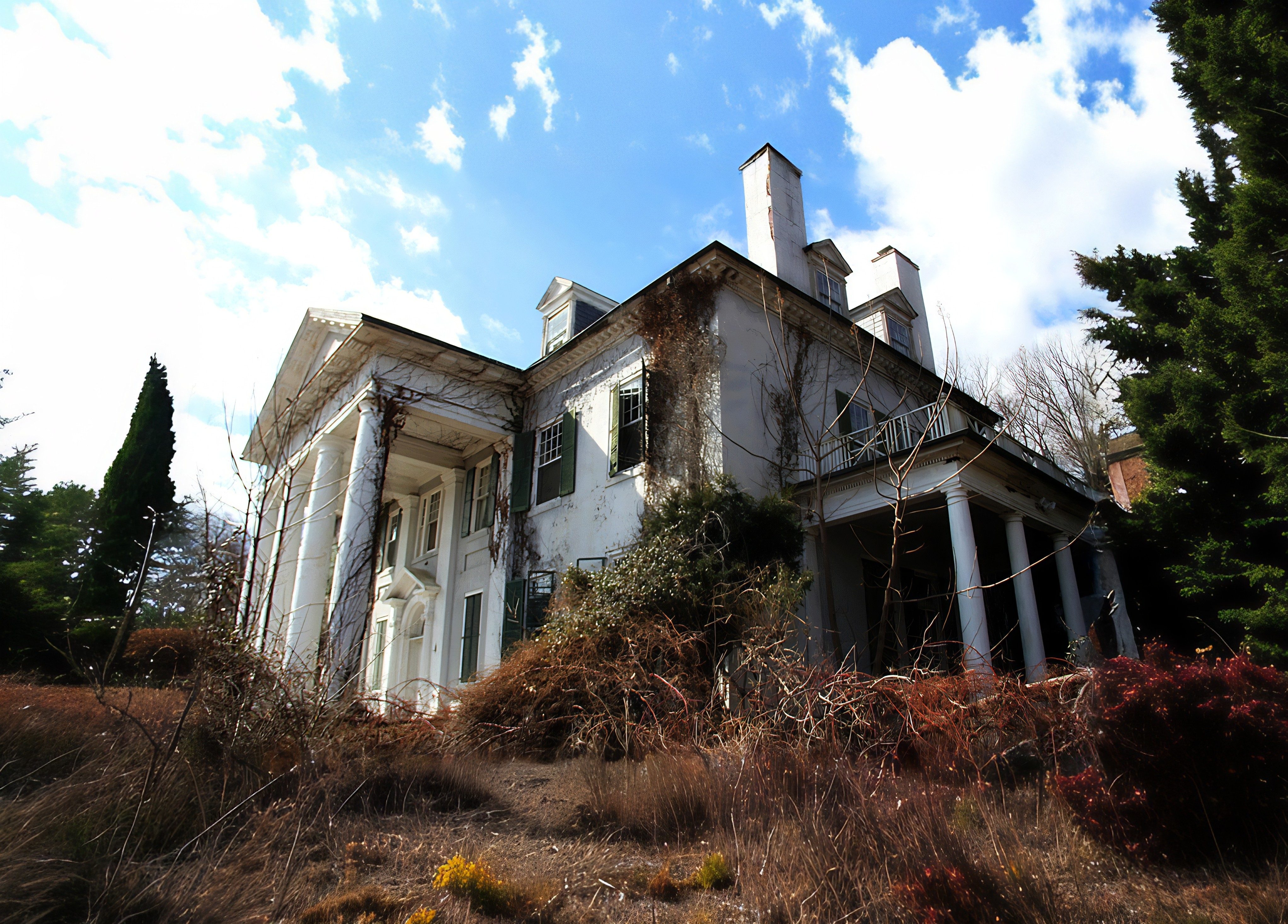
Brambles and dead brush press in from every side. On a bright blue day, the mansion waits — its bones still sound beneath the ruin.
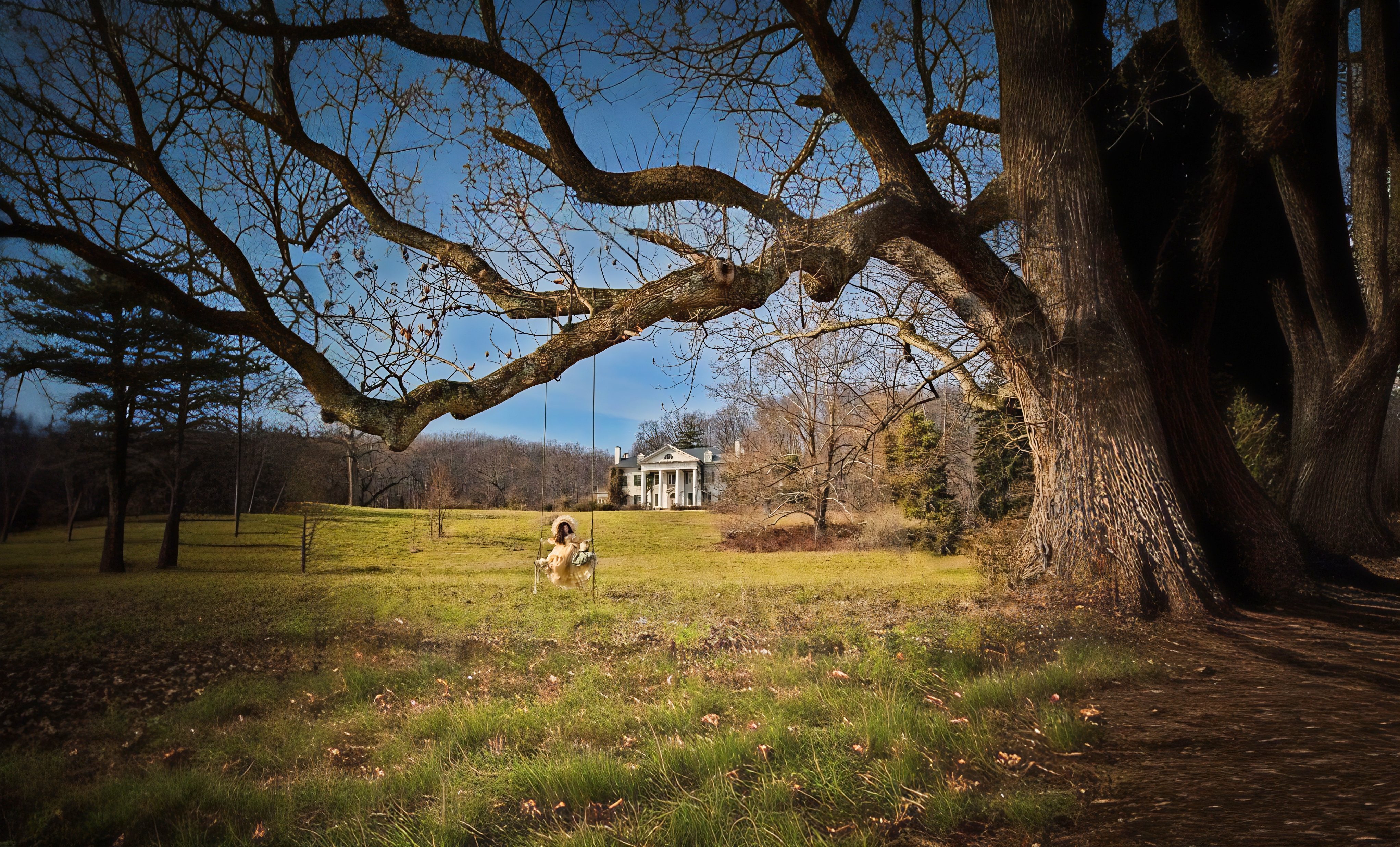
"It was asking to be saved."
— Sharon Virts
An Essay by Sharon Virts
Finding the Story Within the Walls of a House
"Most historical novelists go looking for their stories. Mine came looking for me — through the walls of my own home."
Sharon and her husband Scott live in Selma, an early nineteenth-century historic manor in Leesburg, Virginia, that they pulled back from the edge of ruin. What began as a preservation project became something far stranger and more personal: a story that refused to stay in the past.
"I didn't choose Selma's history. It chose me. The further we dug into the house, the further the house dug into us."
"Selma was built by General Armistead Mason, a United States senator who, in 1819, was shot dead in a duel by his hot-tempered young cousin."
That duel was the catalyst that inspired her writing career — two kinsmen, a quarrel that spiraled past the point of return, and a code of honor that demanded blood.
"When I learned what happened on that dueling field — who pulled the trigger, who walked away, and what the survivor had to live with — I knew I had found my story. Not a story I was inventing. A story I was being asked to tell."
Explore Further
"The past is not behind us. It lives in the houses we save."
— Sharon Virts
The Heart of Fields of Honor
Selma & the Saga
She didn't simply write Selma Mansion into history — she brought it back to life. Its story lives through every chapter of Fields of Honor, and through Sharon Virts's own journey of restoration, preservation, and storytelling.
The Restoration
Saving a Piece of History
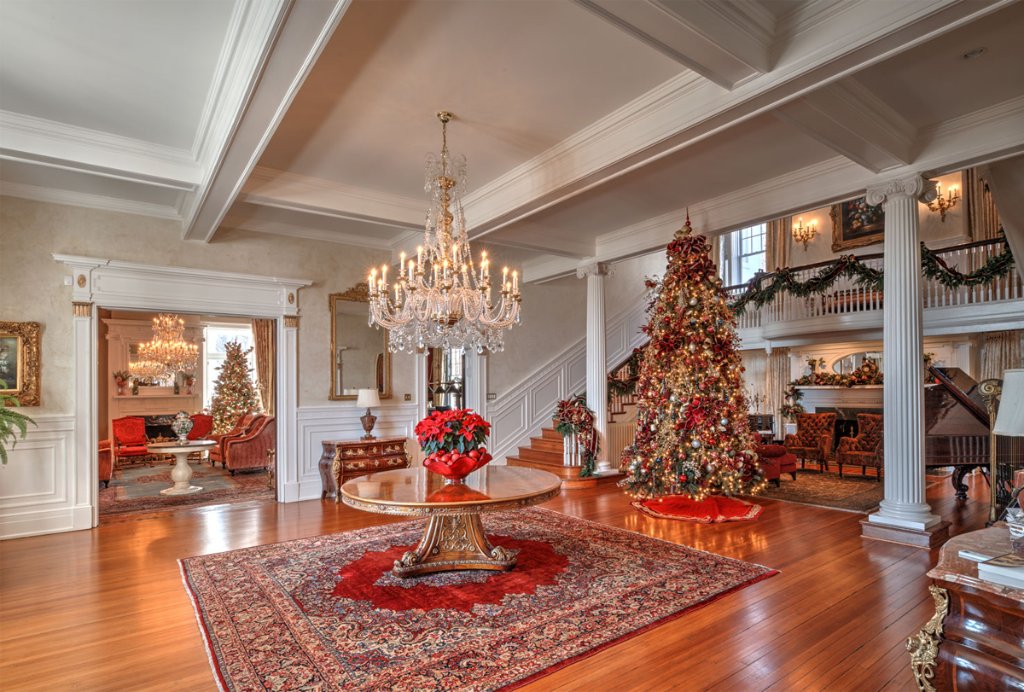
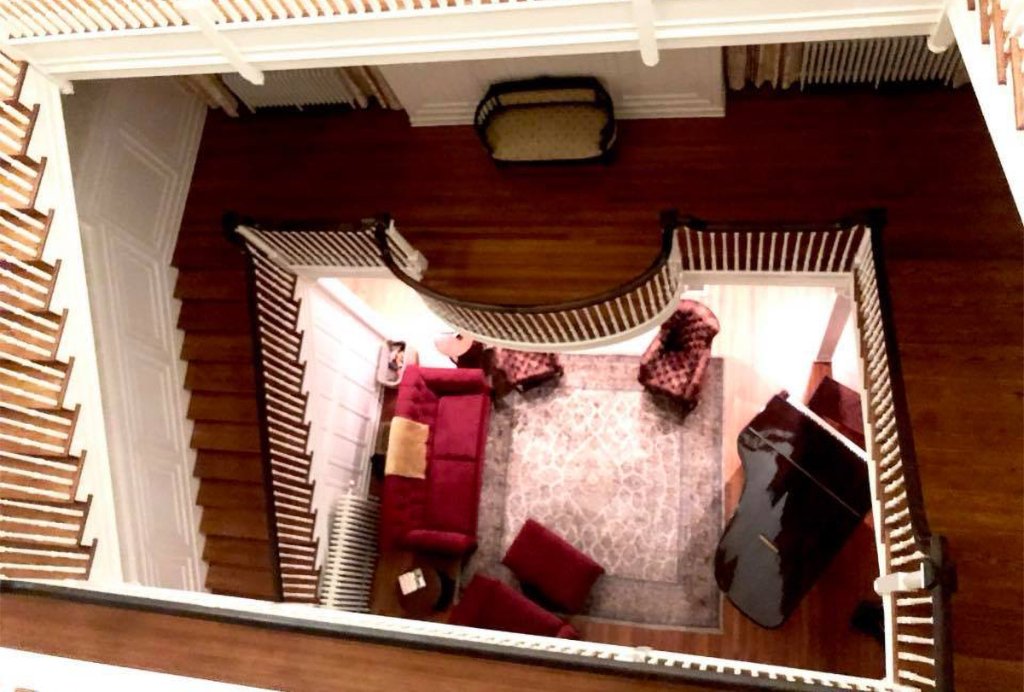
When Sharon Virts and Scott Miller first saw Selma, the estate had suffered years of neglect and vandalism. What followed was a meticulous, top-to-bottom labor of love — restoring every molding, every mantel, every column, and every detail of this 1810 landmark back to its original grandeur.
Over 109,000 followers watched the restoration unfold on social media, turning Selma into one of the most-watched historic preservation stories in America. Every room — from the grand staircase to the rosewood piano parlor — was documented and shared.
109K+
Social followers
2016
Restoration began
1810
Originally built

Next Chapter · Downtown Leesburg, Virginia
The Eliza House
Built in 1811 and formerly known as the Lynch House, this downtown Leesburg landmark is being reborn as the Eliza House — named for Eliza Thompson, who fought a 13-year court battle for ownership after her husband was killed in the Civil War. The next restoration is already underway.
Explore the Eliza House